
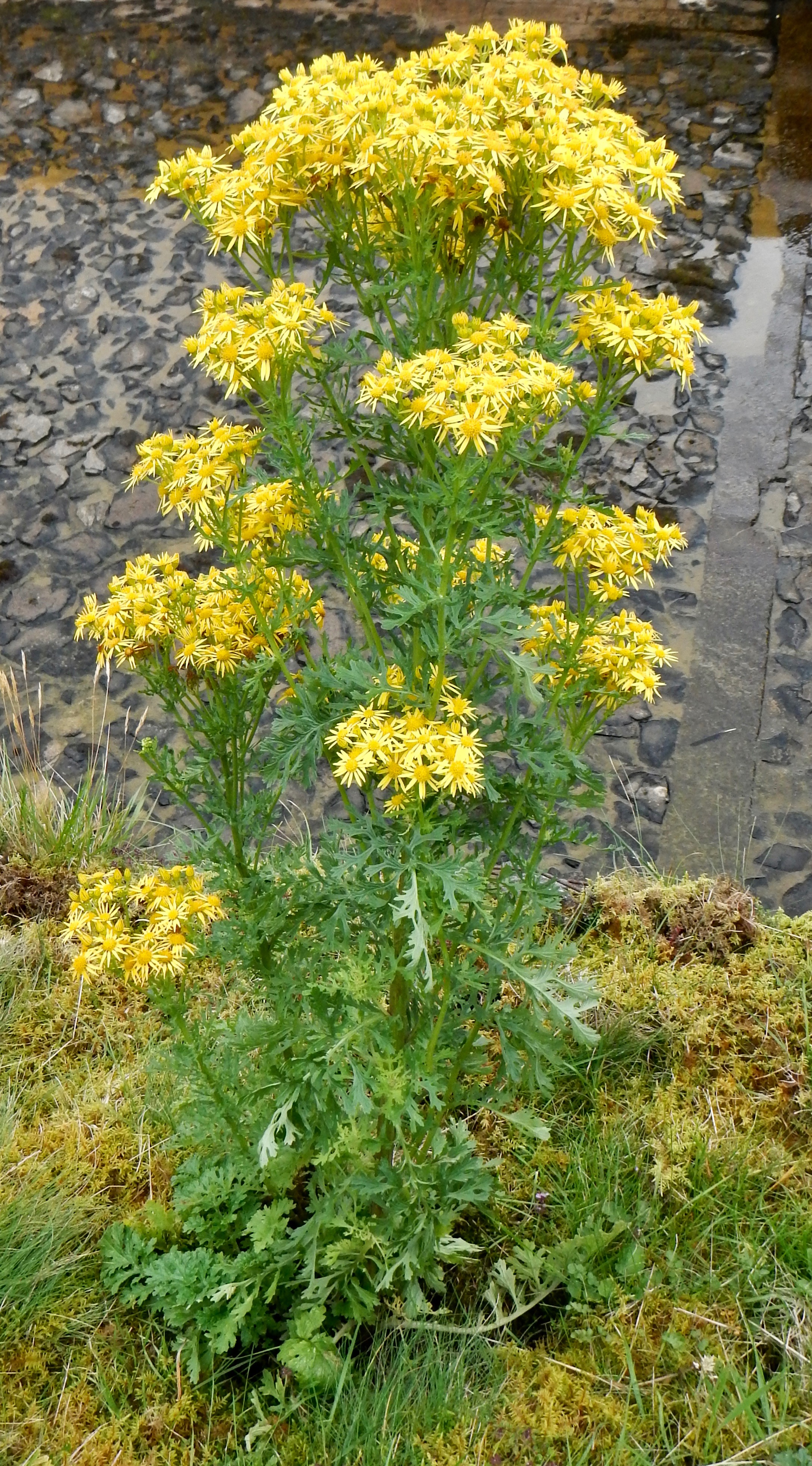
This is a common plant seen standing tall in rough pasture,
Senecio jacobaea NT0022 20Aug2017 PW
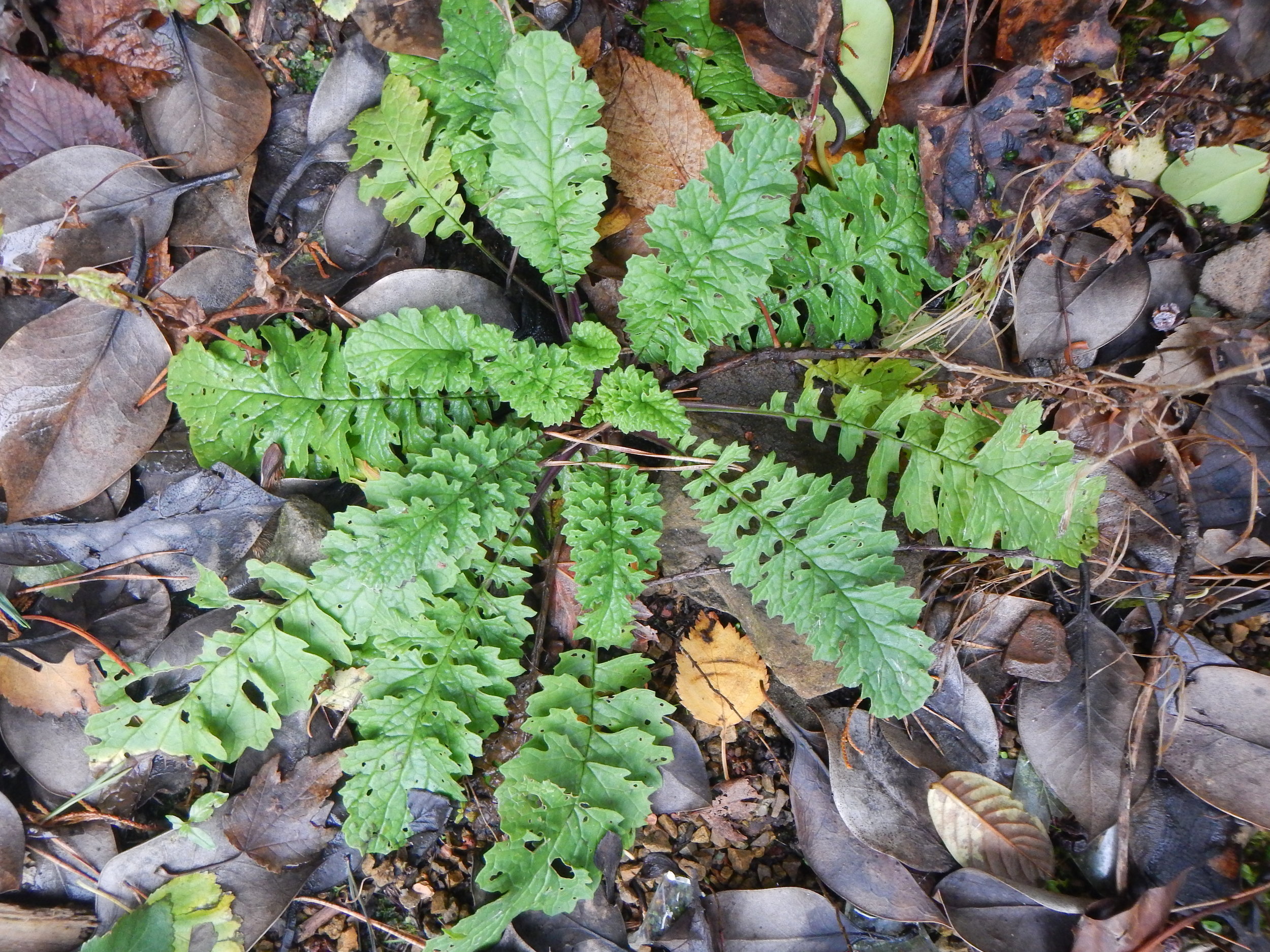
You can often identify Ragwort just from the leaves in a rosette.
Senecio jacobaea NS5563 22Oct17 PW
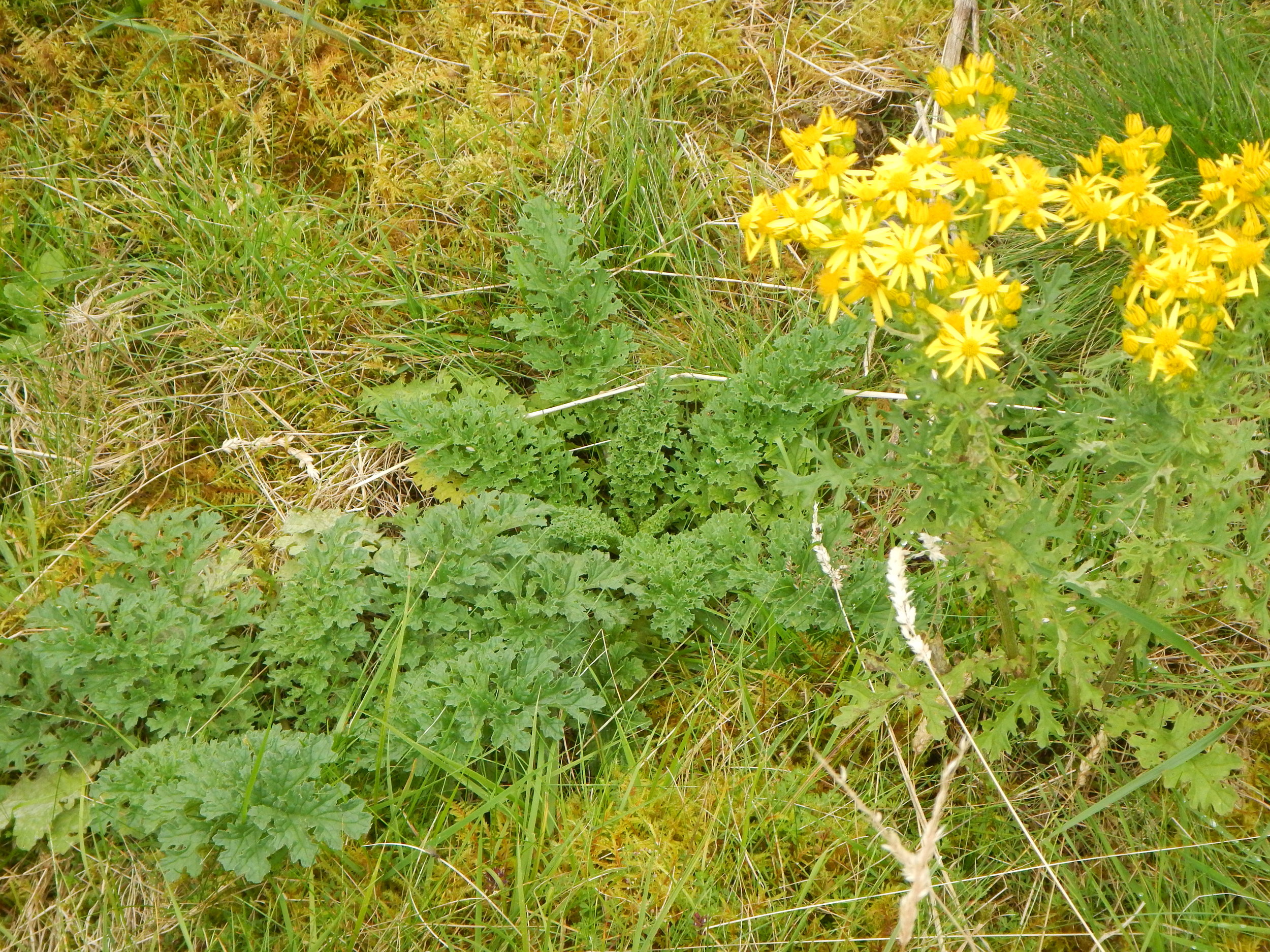
The leaves are distinctive and allow this plant to be identified even when mown flat.
Senecio jacobaea NT0022 20Aug2017 PW
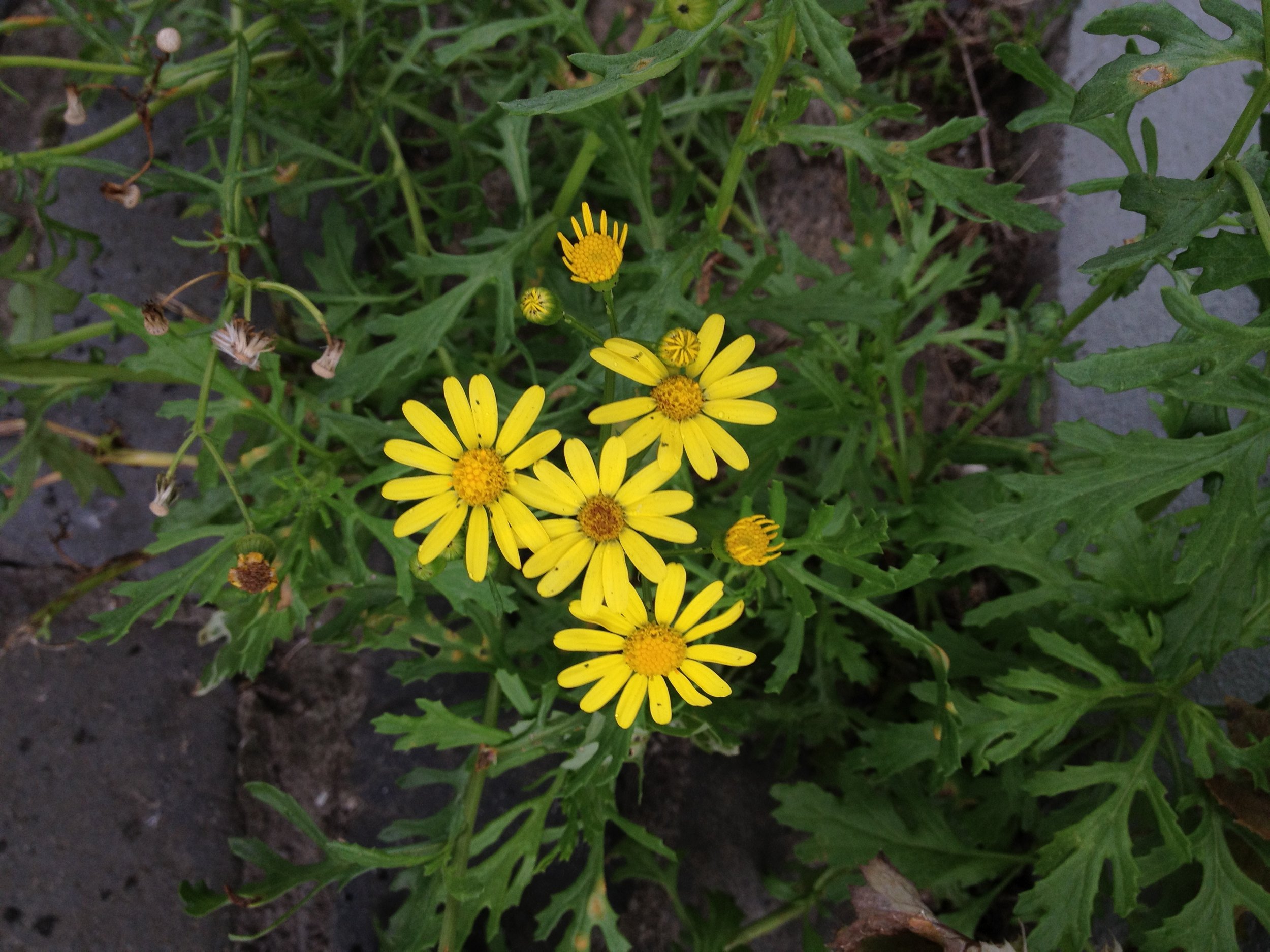
Senecio squalidus 31Aug12 NS5765 PW
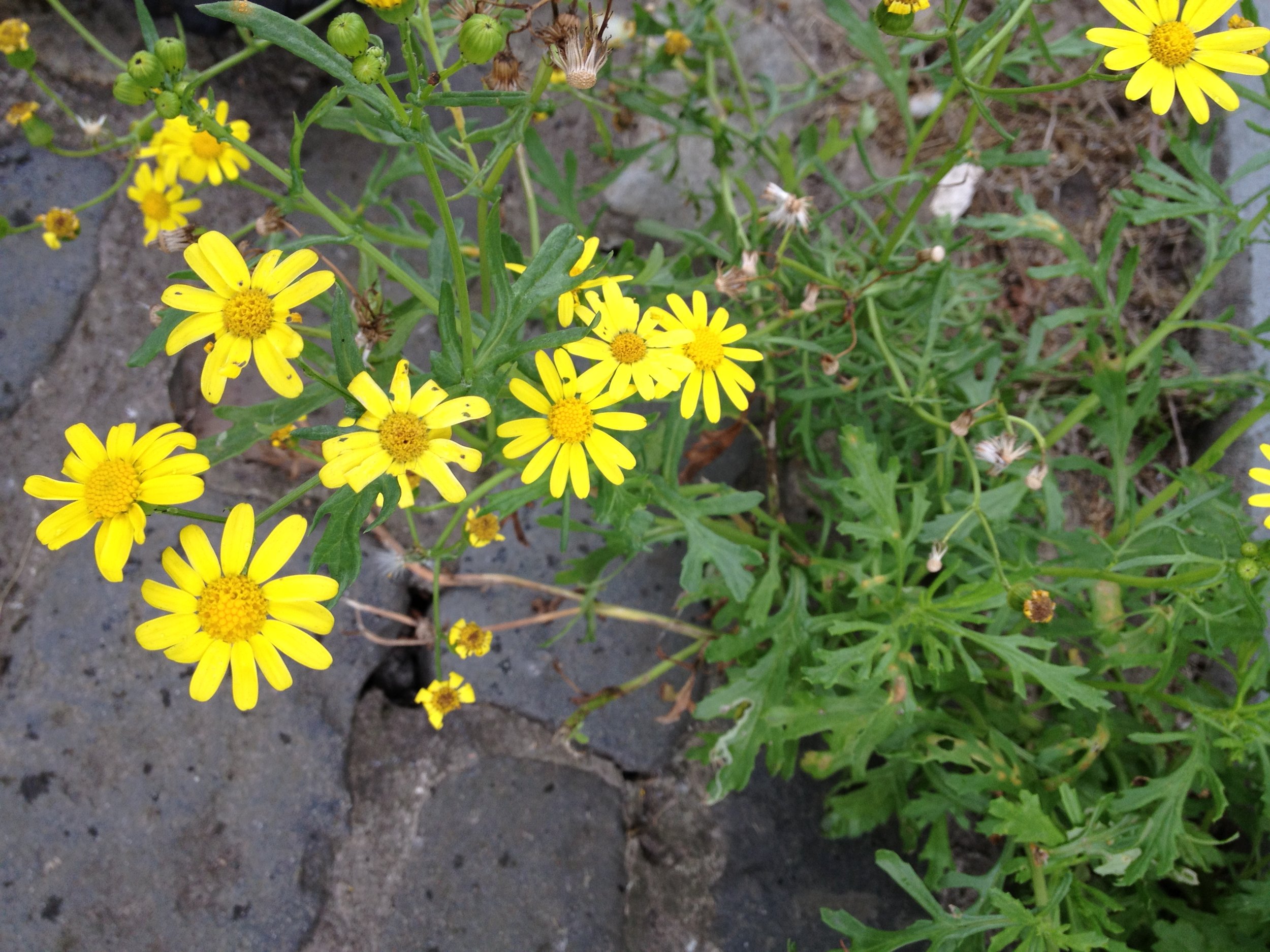
Senecio squalidus 31Aug12 NS5765 PW
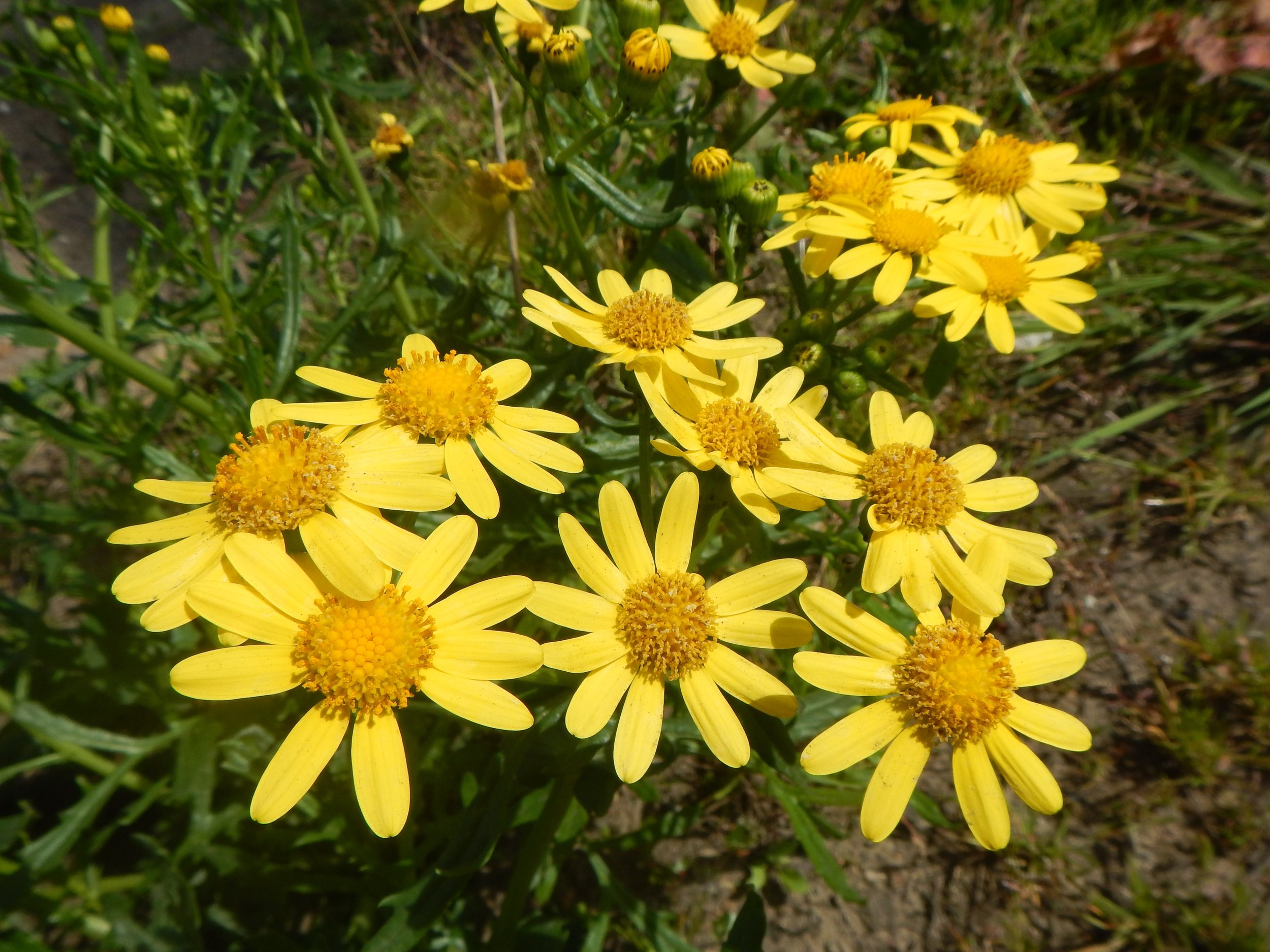
Senecio squalidus 31Aug12 NS5765 PW
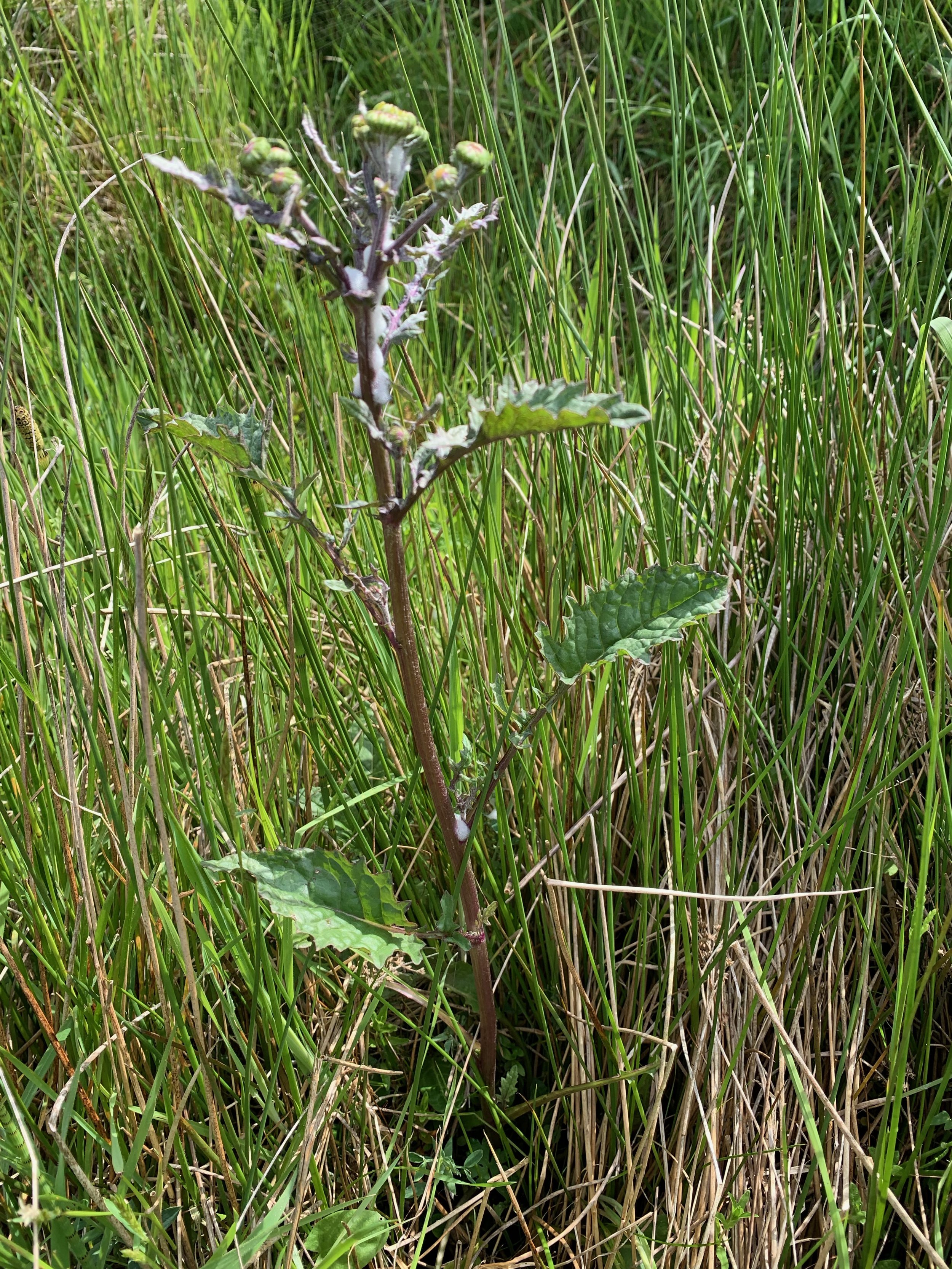
Senecio aquaticus NS7536 07June2019 PW
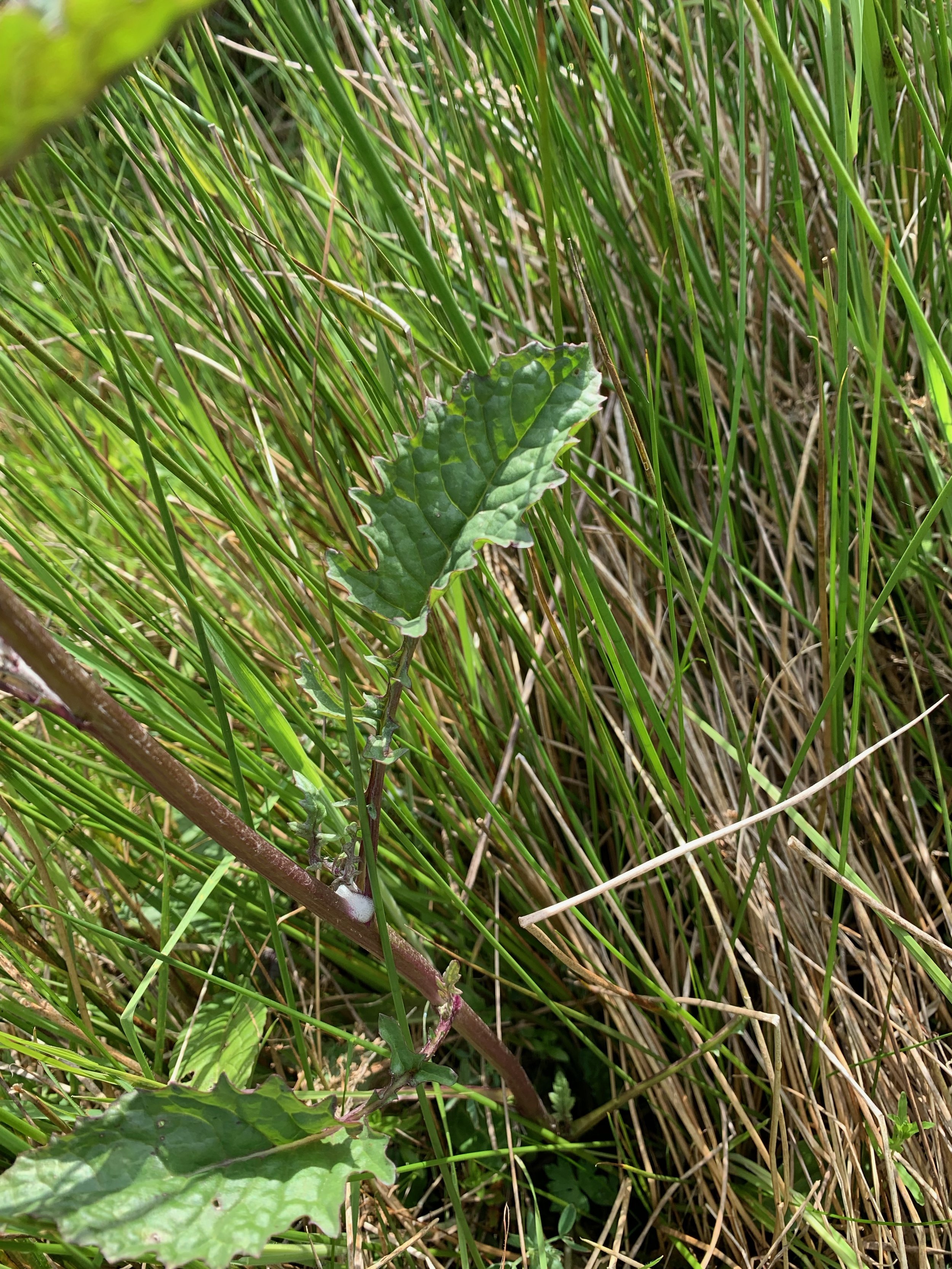
Senecio aquaticus NS7536 07June2019 PW
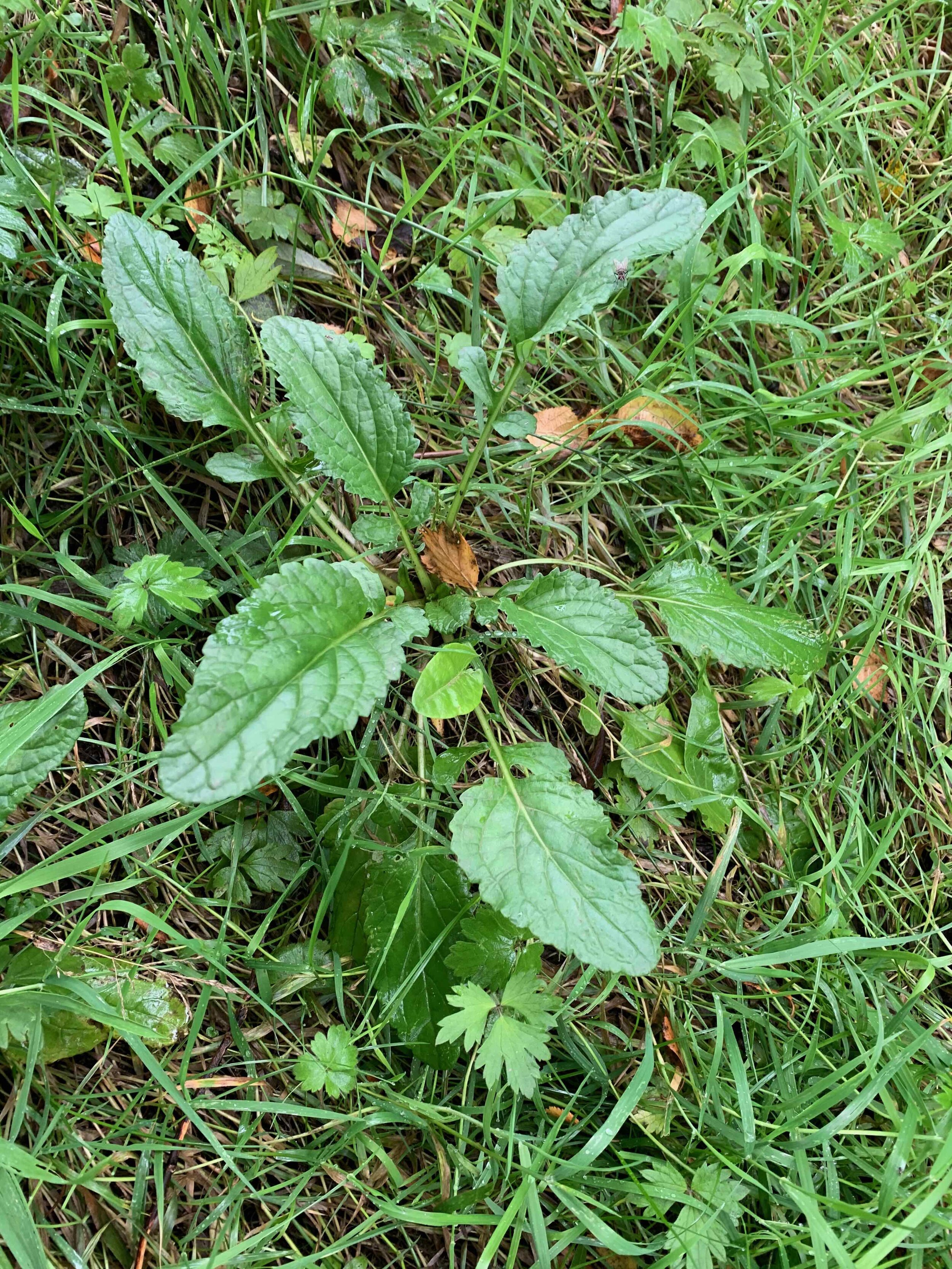
Senecio aquaticus NS8068 8Sep2020 PW

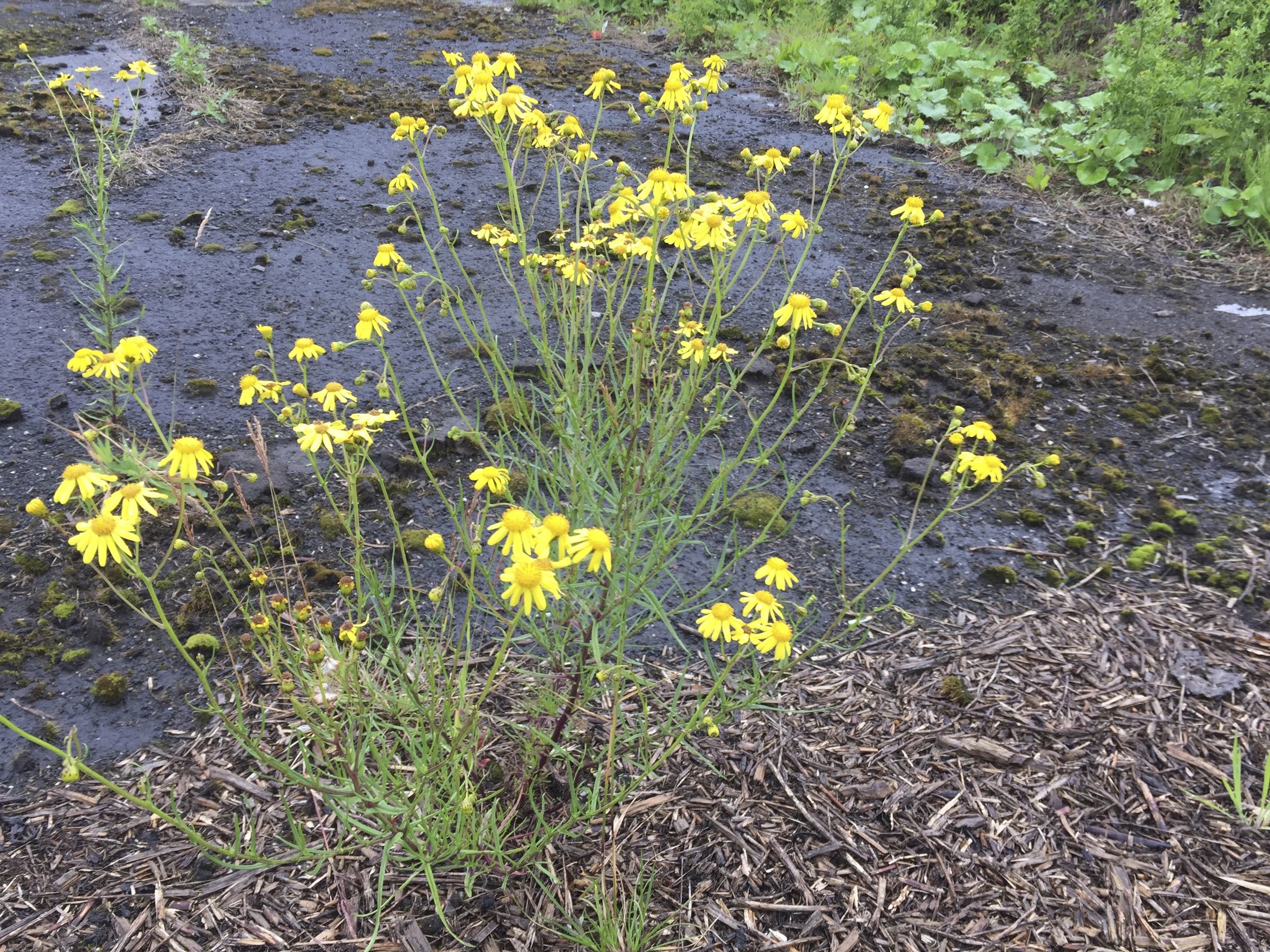
Senecio inaequidens 25July2017 NS5565 MP

Senecio inaequidens NS5666 25Jul2017 PW
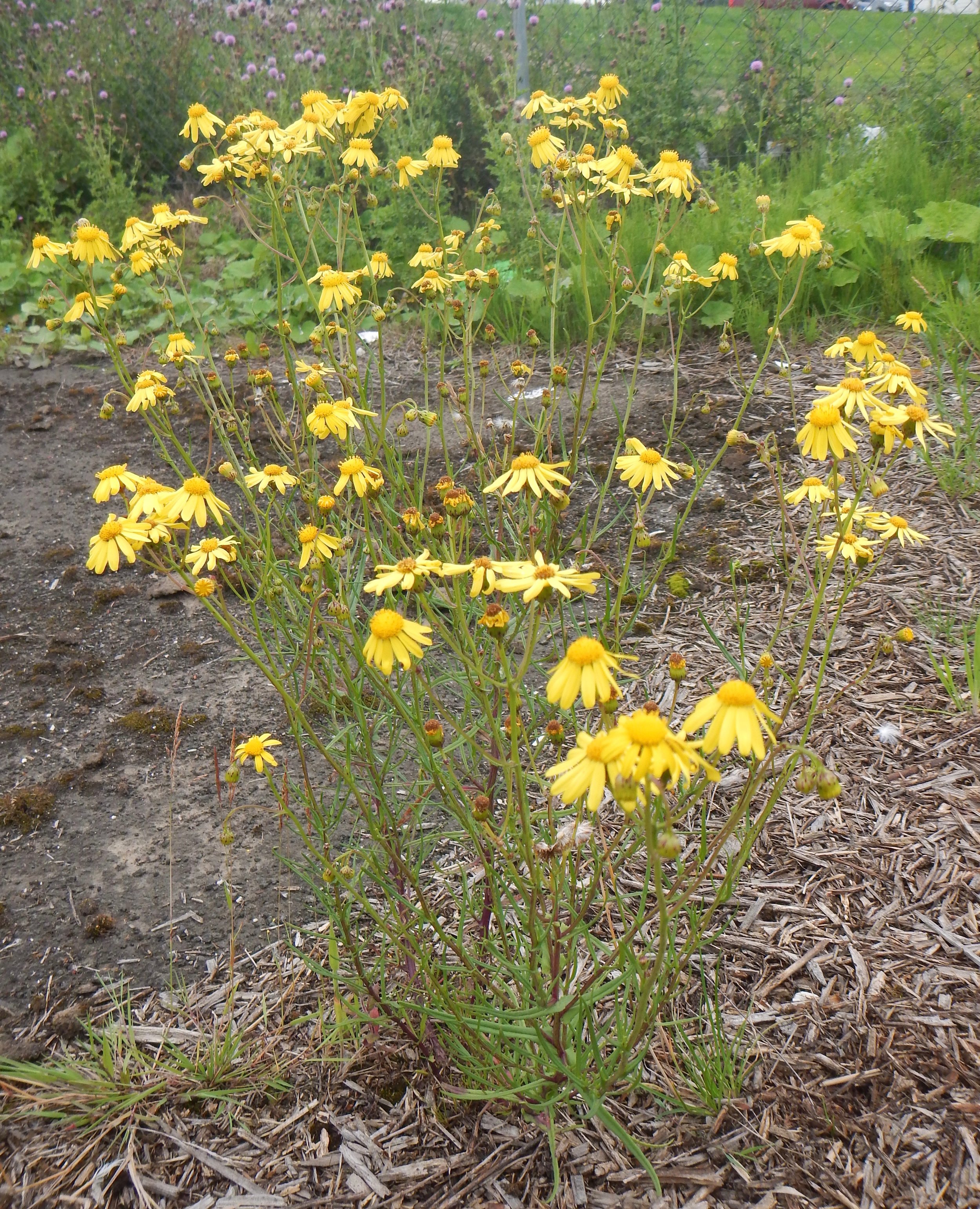
Senecio inaequidens NS5666 25Jul2017 PW
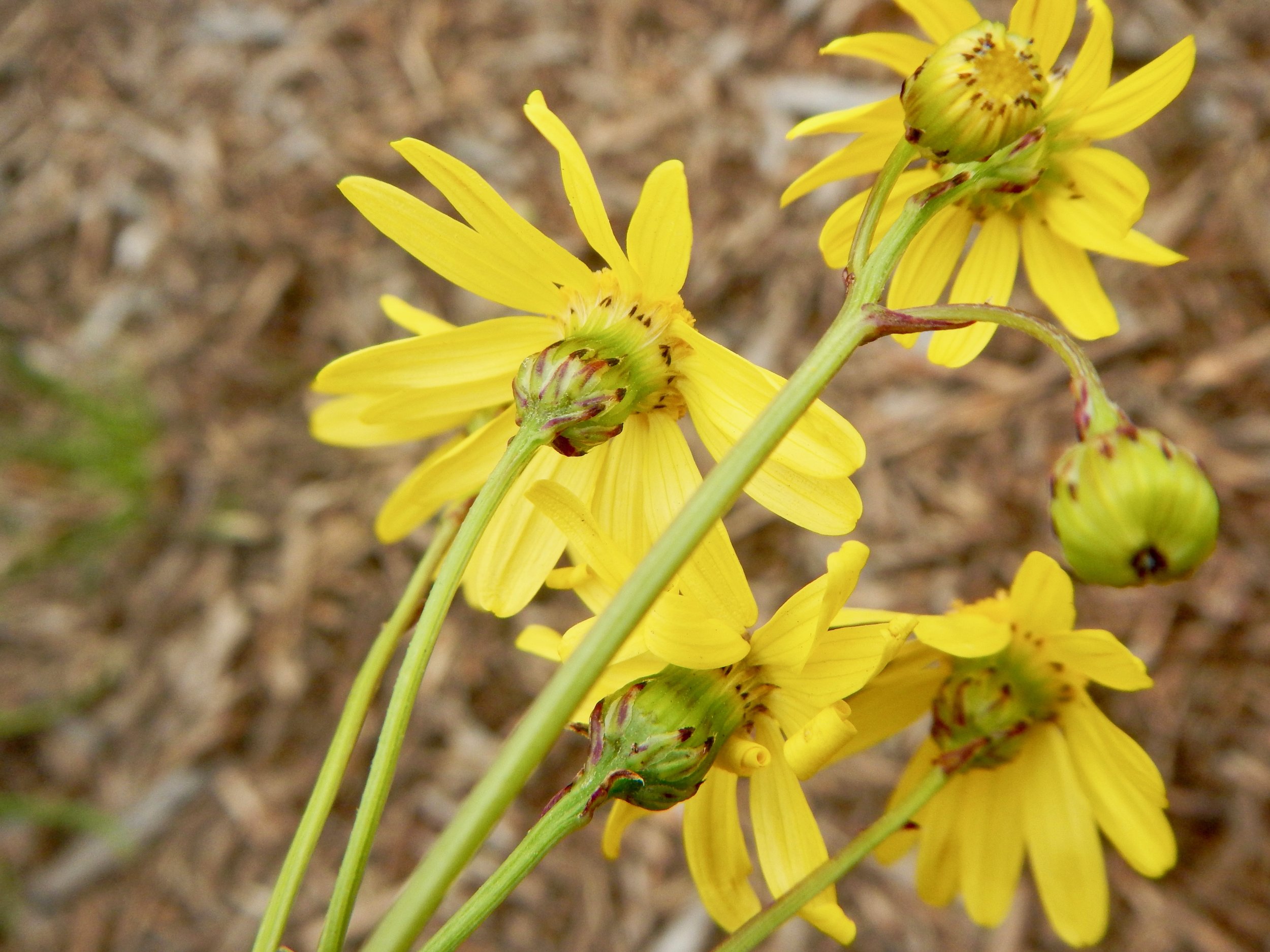
Senecio inaequidens NS5666 25Jul2017 PW
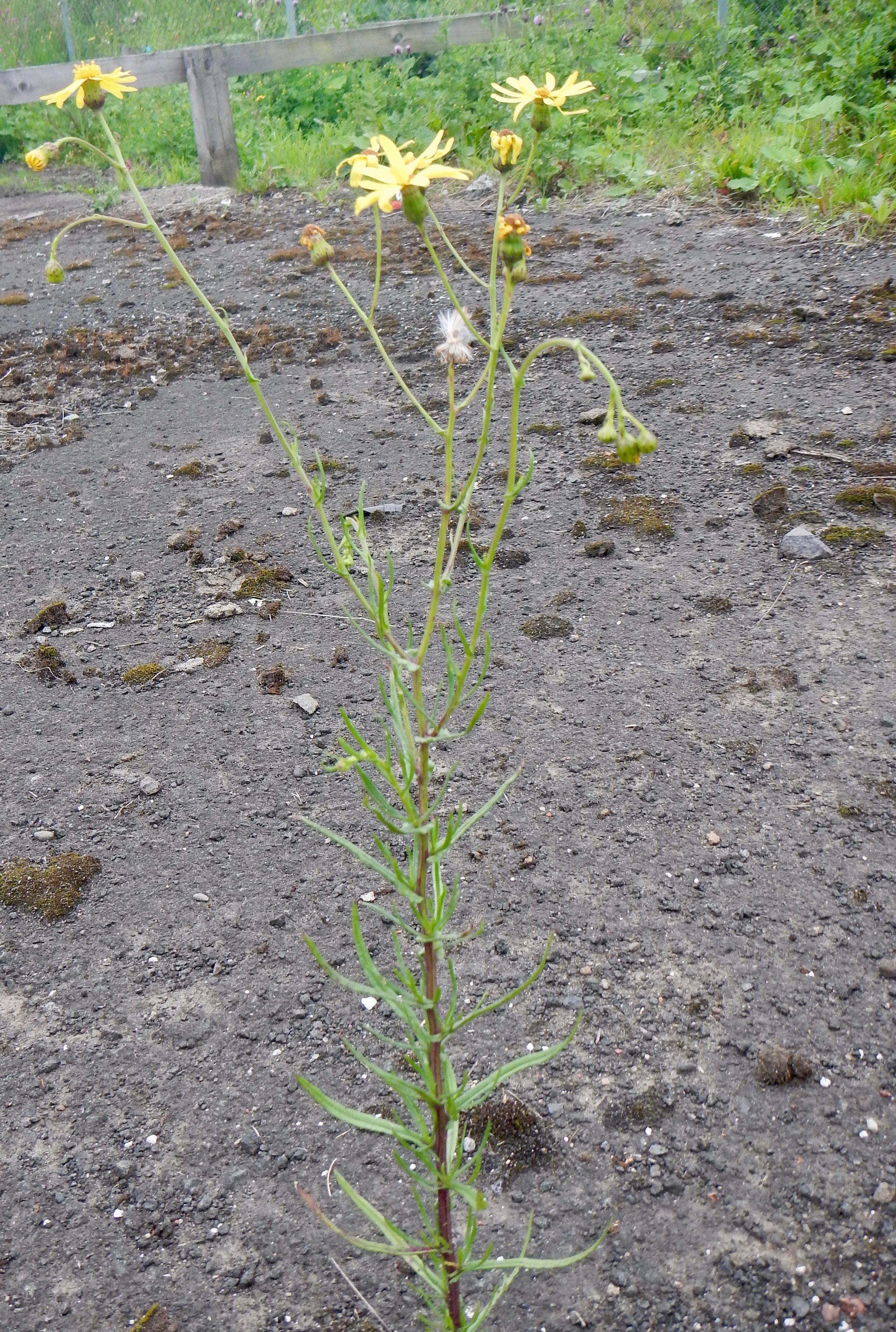
Senecio inaequidens NS5666 25Jul2017 PW
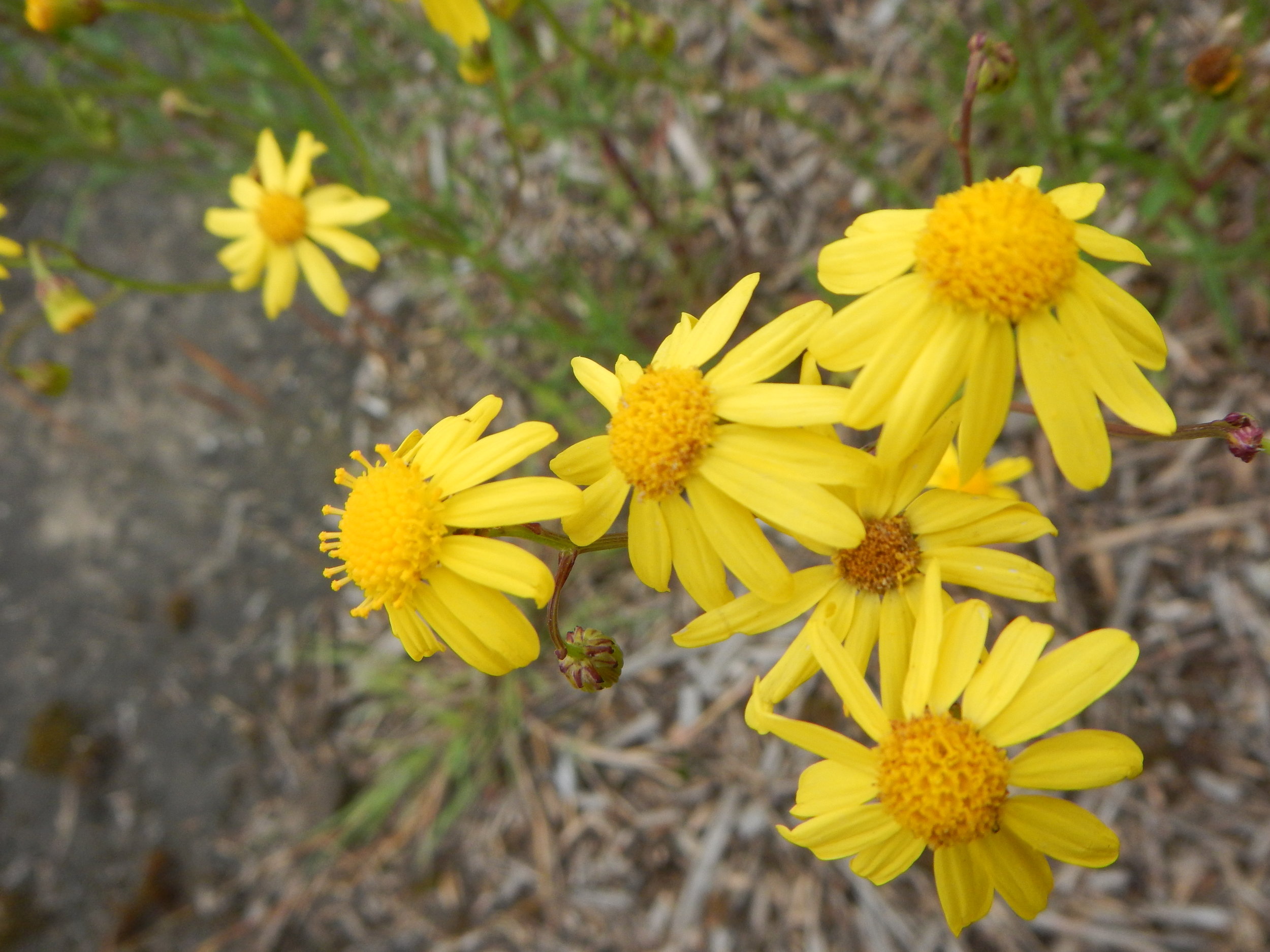
Senecio inaequidens NS5666 25Jul2017 PW

Senecio inaequidens NS6162 21Sep2018 PW
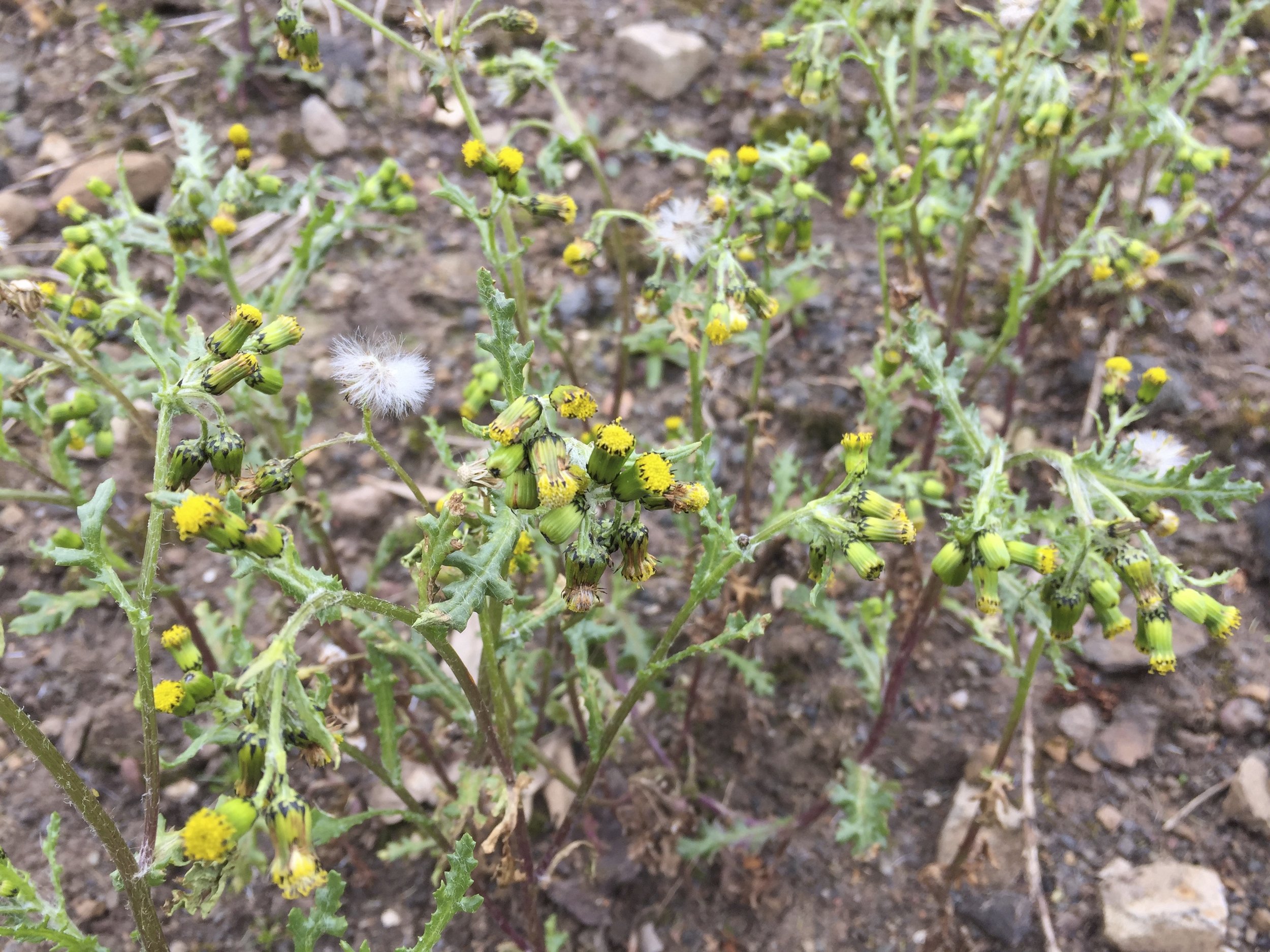
Senecio vulgaris 23Apr2017 NS5957 MP
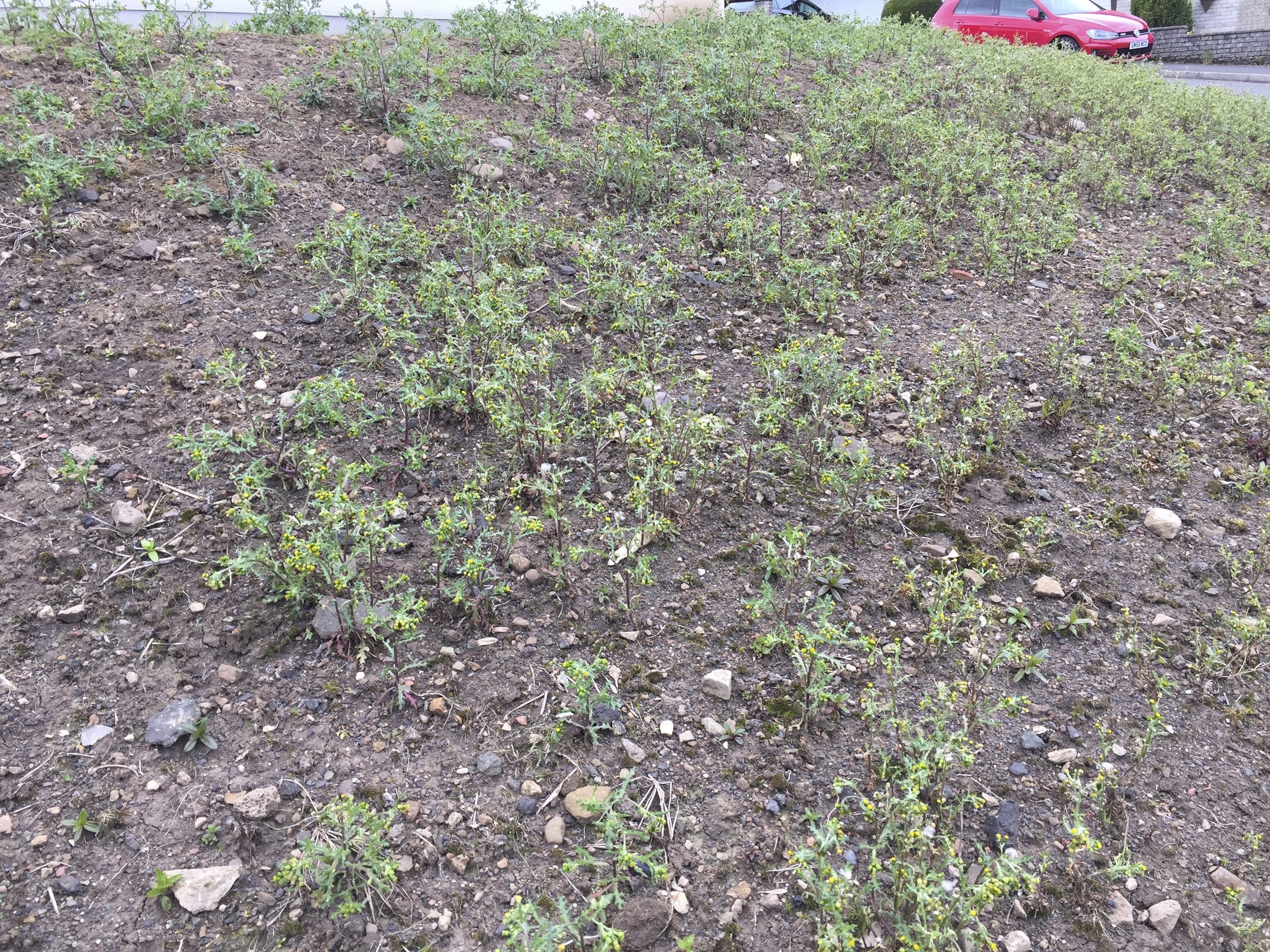
Senecio vulgaris 23Apr2017 NS5957 MP

Senecio sylvaticus NT0021 20Aug2017 MP
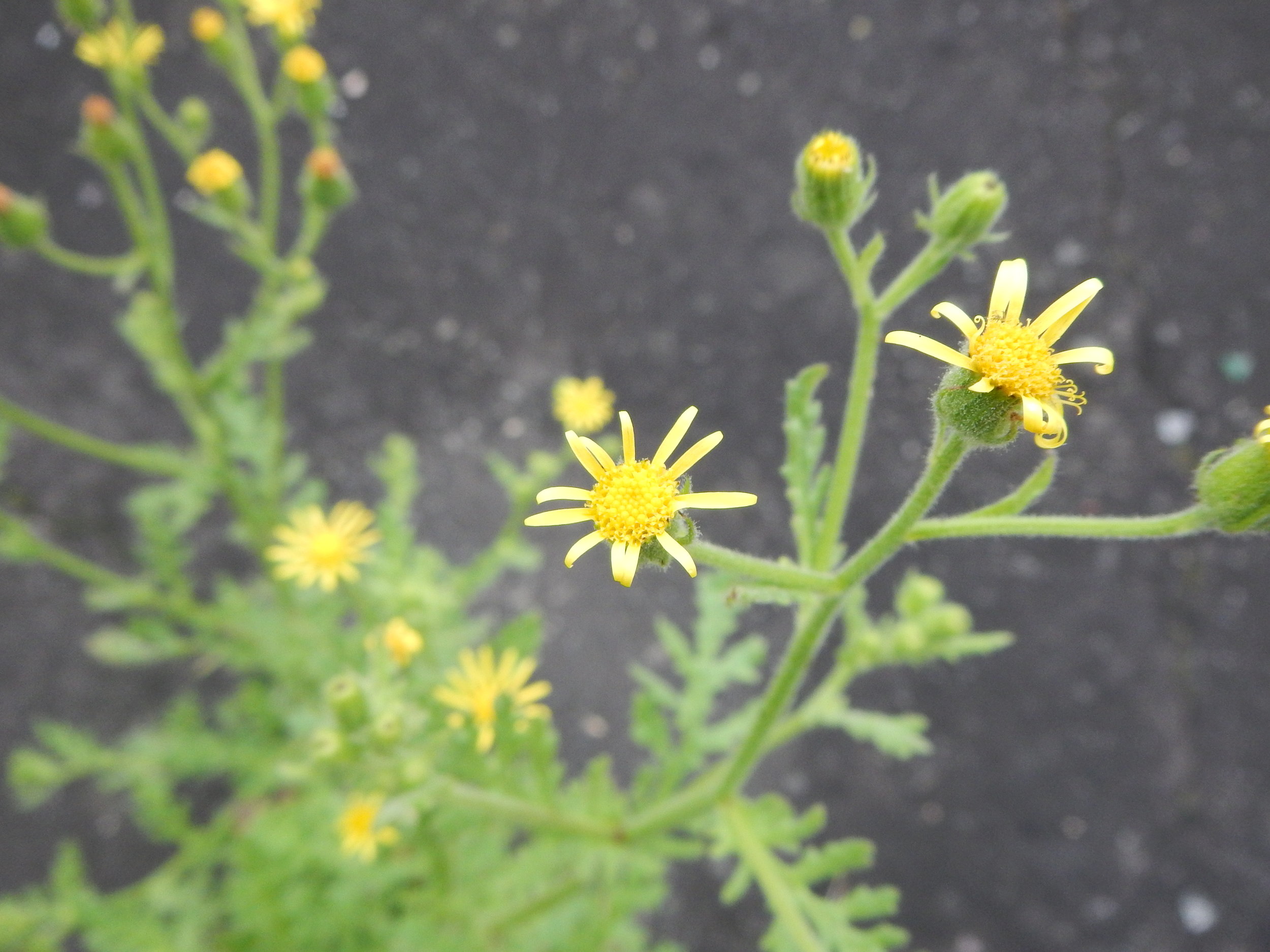
Senecio viscosus NS6765 23Jul2017 PW
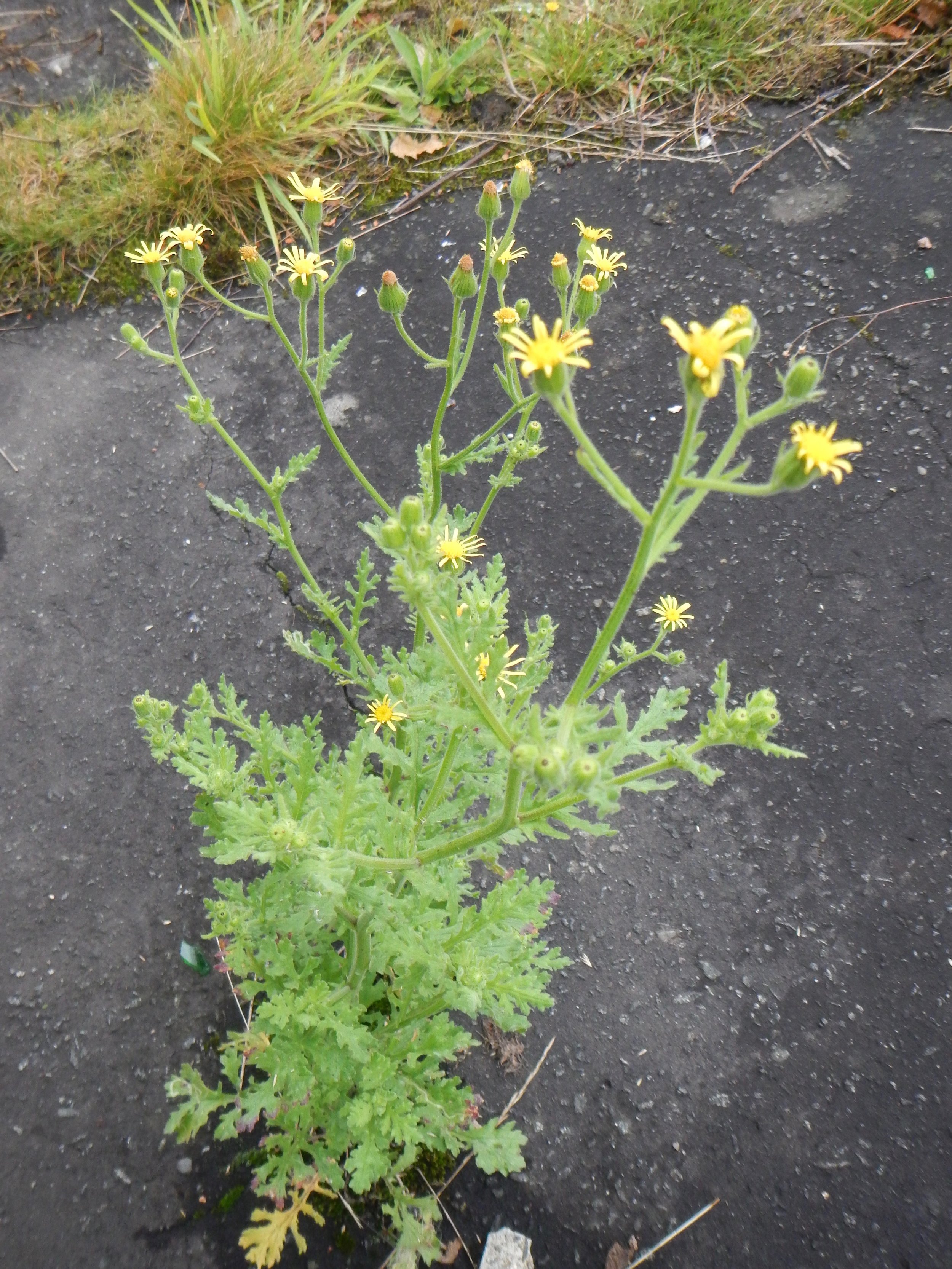
Senecio viscosus NS6765 23Jul2017 PW
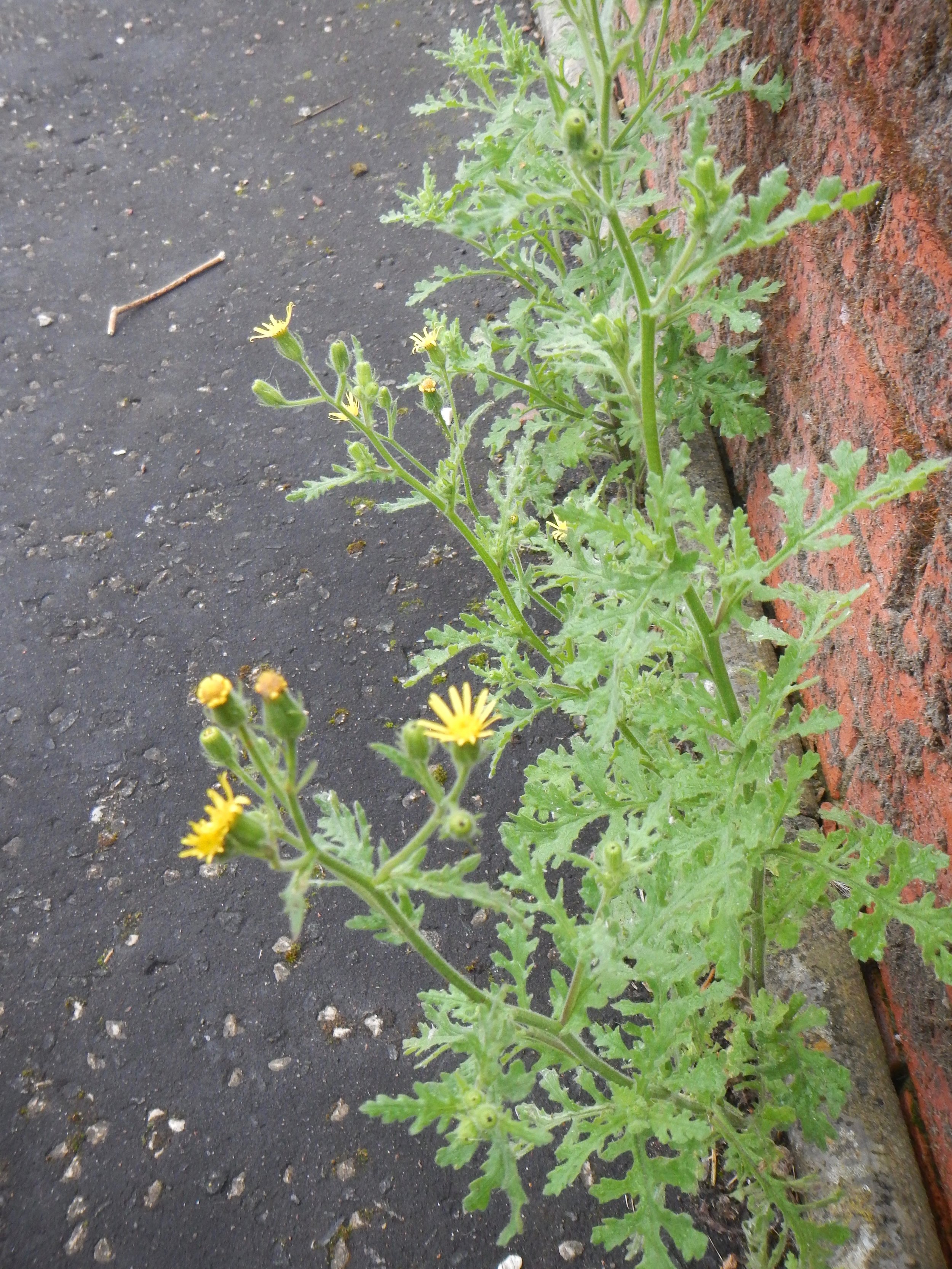
Senecio viscosus NS6765 23Jul2017 PW

Senecio viscosus NS5866 17Feb2018 PW
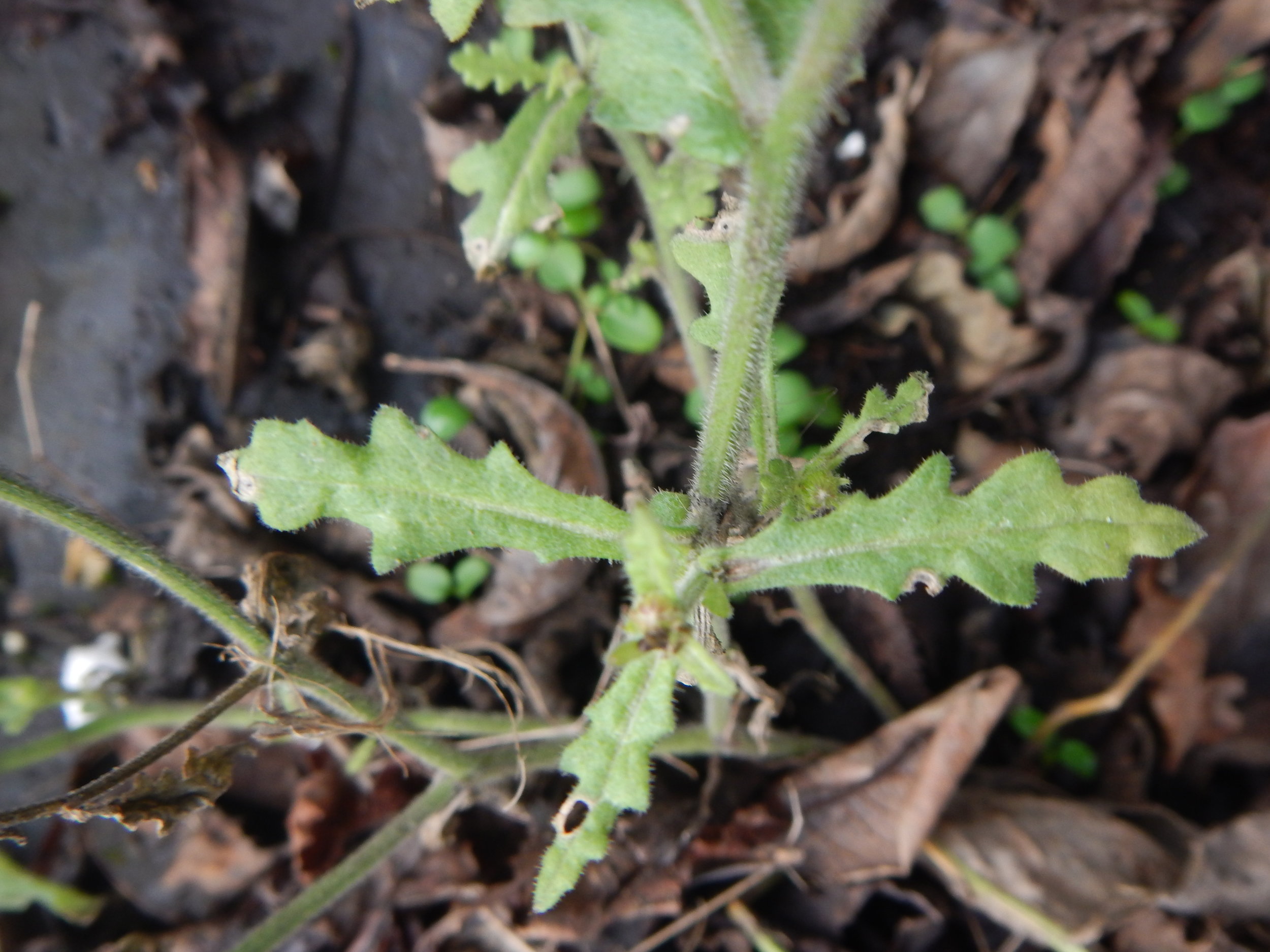
Senecio viscosus NS5866 17Feb2018 PW
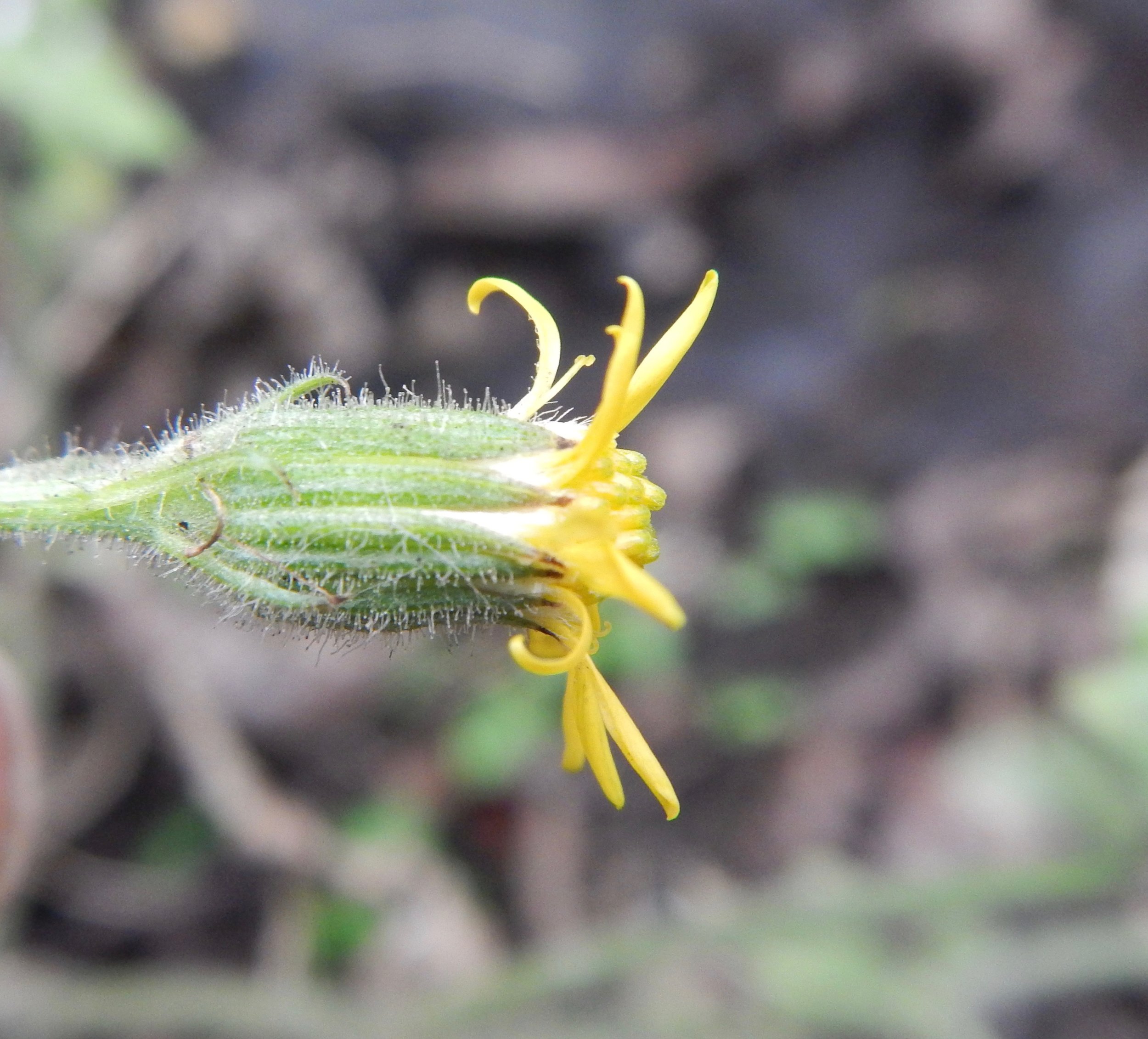
Senecio viscosus NS5866 17Feb2018 PW
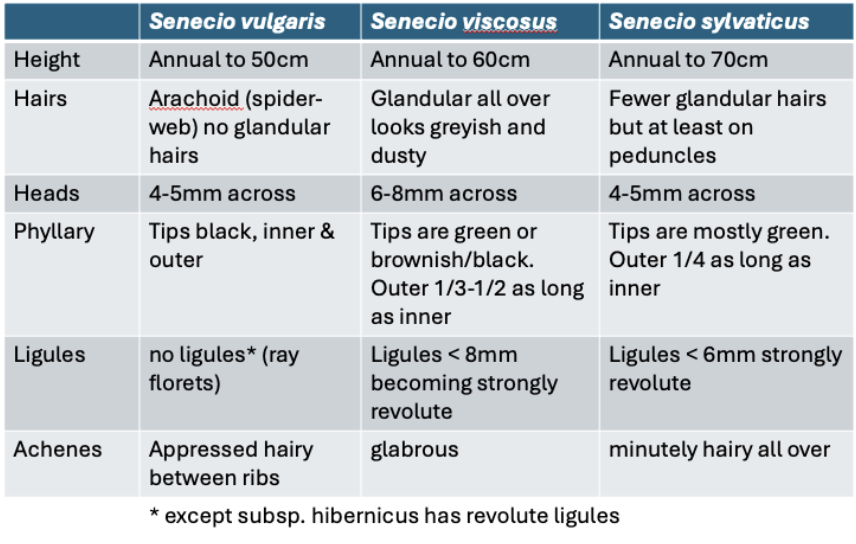
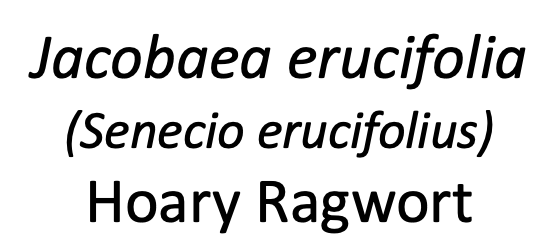
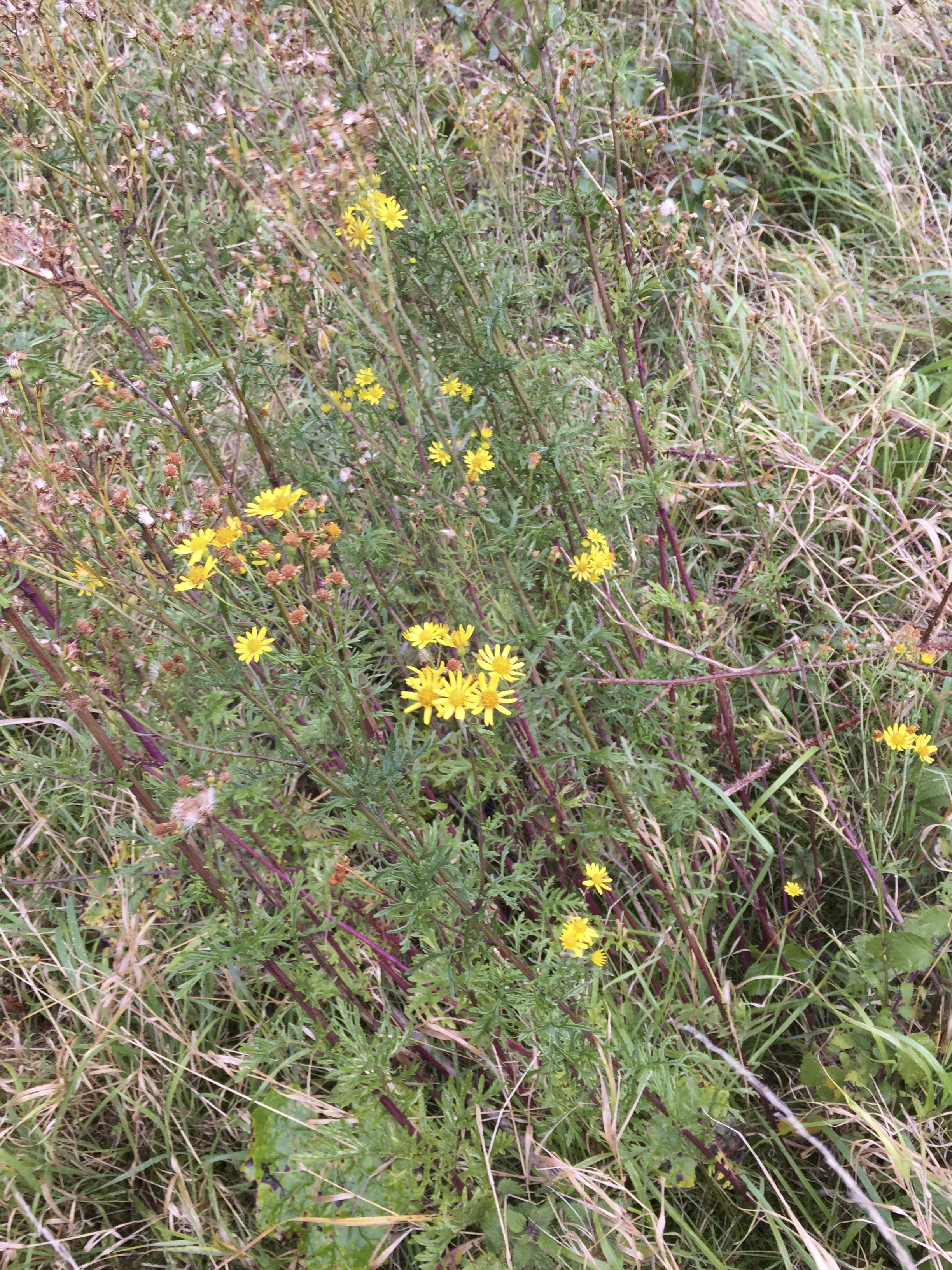
Senecio erucifolius NS6361 07Oct2018 MP
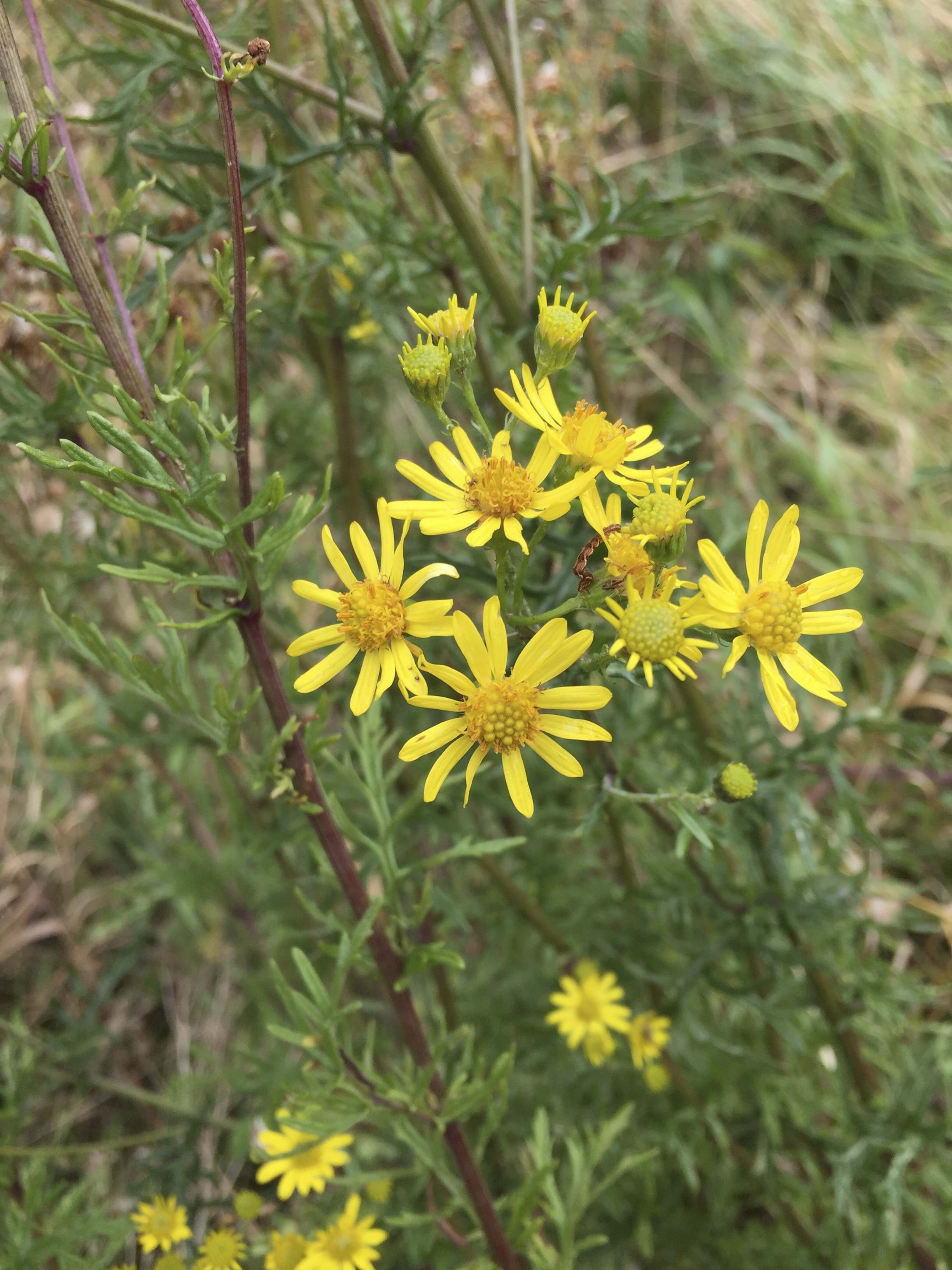
Senecio erucifolius NS6361 07Oct2018 MP
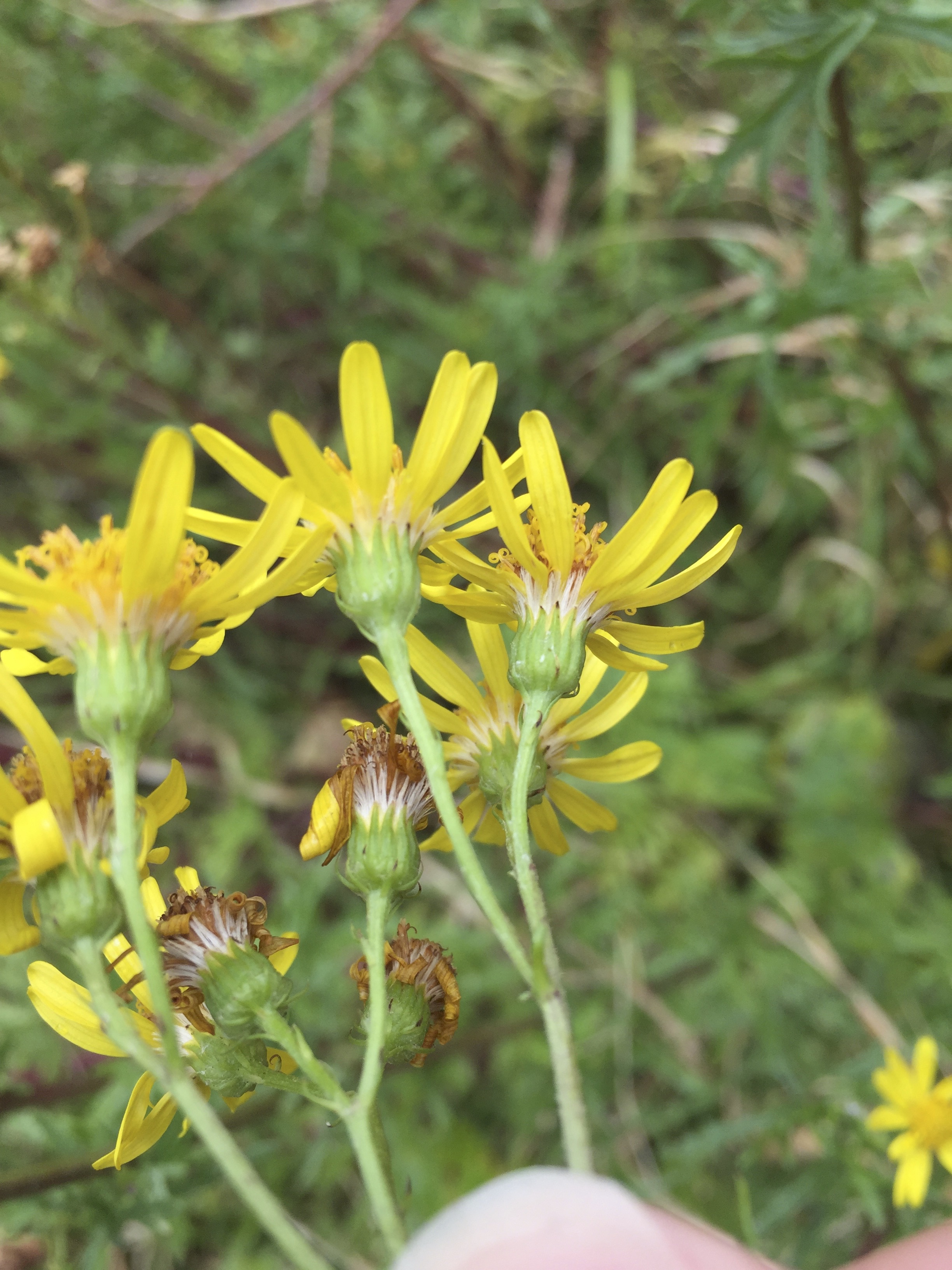
Senecio erucifolius NS6361 07Oct2018 MP

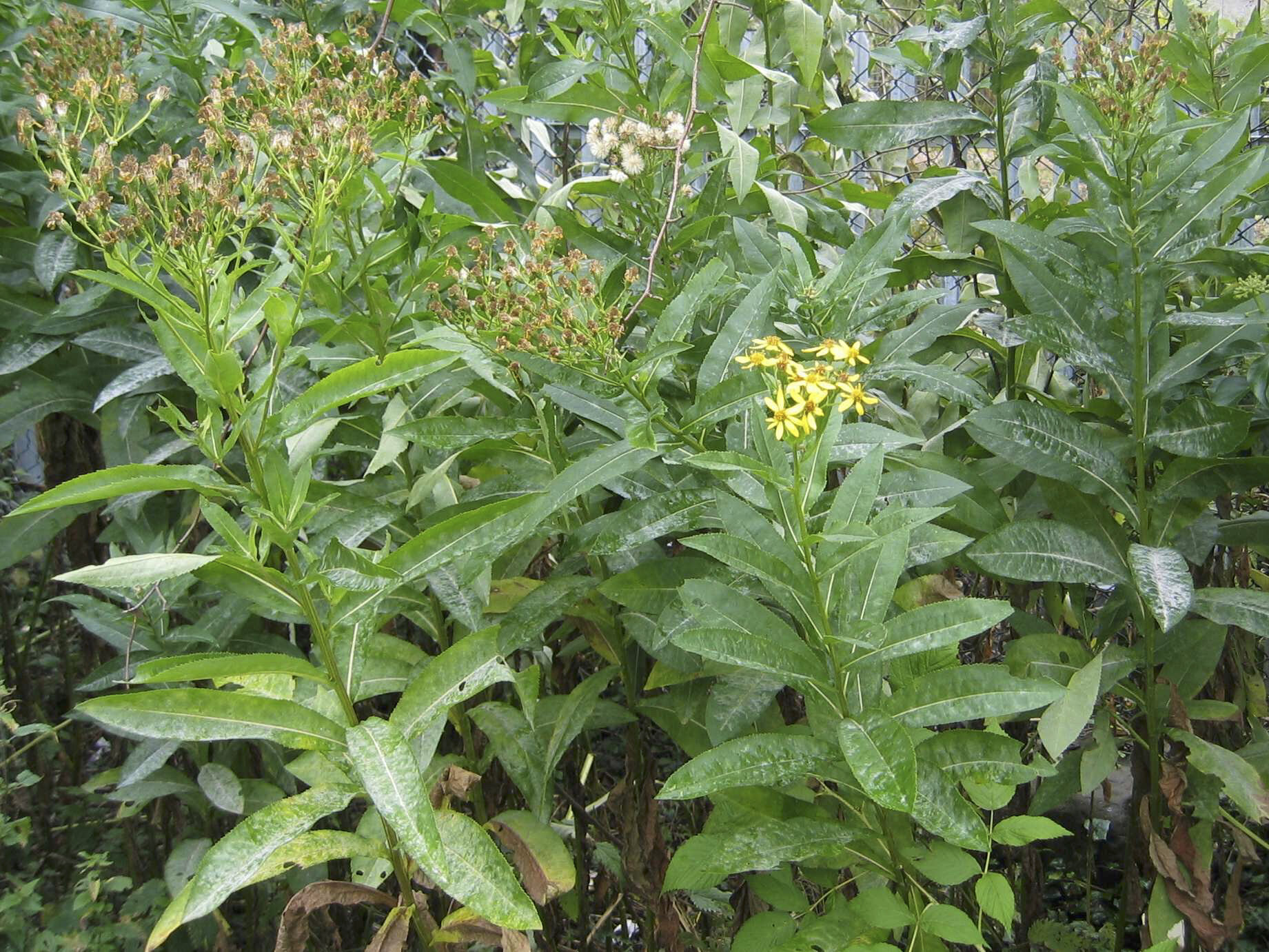
Senecio sarracenius NS7155 17Sep2005 MP

Senecio sarracenicus NS6163 22Sep2018 PW
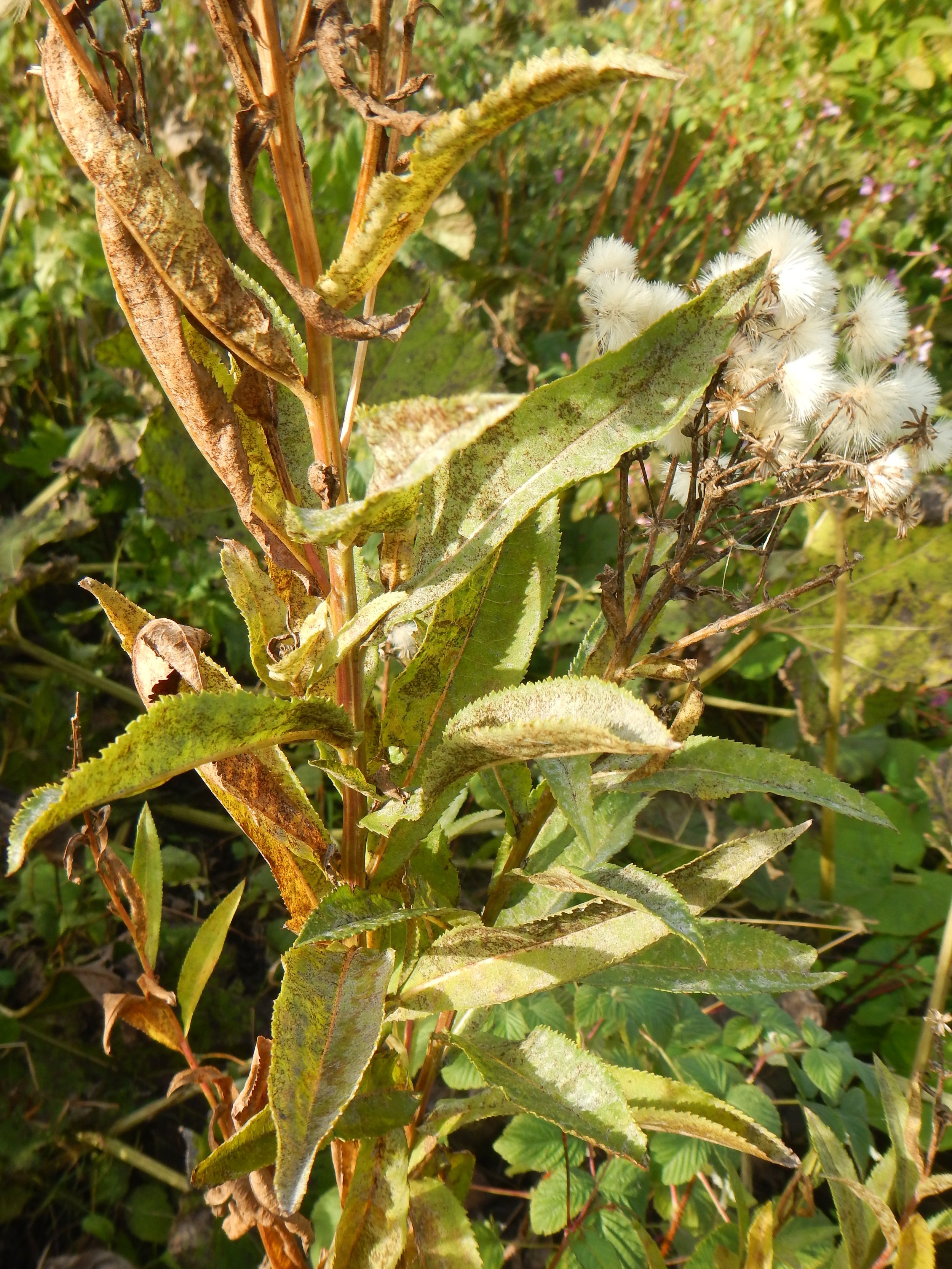
The stem are sessile and serrated.
Senecio sarracenicus NS6163 22Sep2018 PW
Senecio family - Ragworts and Groundsels
Senecio was split into Senecio and Jacobea on clear genetic grounds, but there are few consistent morphological differences.
Jacobaea vulgaris (Senecio jacobaea) Common Ragwort Erect perennial to 1.5m with herbaceous, grooved stem ±with web-like hairs, but no glandular hairs. Basal leaves ovate to obovate, ±pinnatifid with blunt basal lobe no wider than the other lobes. Normally dying before flowering complete. Leaves ±hairy underneath mainly on veins and no glandular hairs. Stem leaves pinnatifid with blunt basal lobe not wider than the rest of the leaf. Dense inflorescence with overlapping flowers. Supplementary phyllaries 1/4 as long as the main ones. Achenes are hairy
Senecio squalidus – Oxford Ragwort Stems ±woody at the base to 50cms. Stem and leaves ±glabrous. Leaves deeply pinnately lobed to only serrate with terminal lobe acutely pointed. Lower leaves petiolate and upper leaves are sessile. All phyllaries are black tipped. Flowers 16-20mm in open inflorescence. Derived from a hybrid and shows variability.
Jacobaea aquatica (Senecio aquaticus) Marsh Ragwort has1 - 2 pairs of lateral lobes and terminal lobe is much larger. Supplementary phyllaries 1/4 as long as the main ones and tend to be brown tipped. Lax flowerhead. Achenes of disc flowers are ±glabrous
Senecio inaequidens – Narrow-leafed Ragwort Stems woody at the base to 80cms. Stem and leaves ±glabrous. Upper and middle leaves are linear ±entire, sessile and < 5mm wide. ±small teeth ± in-rolled. Yellow narrow petals. in an open inflorescence.
Senecio vulgaris – Groundsel has pinnatifid leaves, ±cottony or downy below. Lower leaves petiolate, upper leaves sessile ±clasping. No glandular hairs.
Heads 4-5mm across sessile initially later stalked. Involucre cylindrical.
Outer and inner phyllaries ±black-tipped. Ray florets if present < 5mm, revolute. Achenes <2.5mm and are appressed hairy between ribs
ssp. vulgaris is the usual one with no ligules (ray florets). Widespread, gardens, waste ground, streets flowers all the year
var. hibernicus has revolute ligules
(ssp. denticulatus has revolute ligules, unbranched stem lots of web-like hairs, less lobed leaves, fewer capitula and is found in dunes)
Senecio sylvaticus– Heath Groundsel Tall annual to 70cm. Like S. viscosus but less hairy and ±not sticky. Glandular hairs at least on the peduncles. Leaves like S. vulgaris but even more strongly pinnatifid. Supplementary (outer) phyllaries <1/4 as long as the main ones. Phyllary tips are usually green. Ligules < 6mm strongly revolute. Flowers similar in size to S. vulgaris. Achenes are minutely hairy all over. Sandy soils, cliffs, heaths and roadsides
Senecio viscosus – Sticky Groundsel Annual to 60cm. Leaves like S. vulgaris but even more strongly pinnatifid, lower leaves petiolate, upper leaves sessile. Sticky glands (glandular hairs) on stem and leaves, so looks greyish (covered in dirt and dust under lens). Supplementary (outer) phyllaries 1/3 -1/2 as long as the main ones. Phyllary tips are green or brownish/black. Ligules 8 - 15, < 8mm becoming strongly revolute. Flowers larger than S. vulgaris. Achenes glabrous or just minutely hairy in the grooves Similar places to Groundsel but later in the season
Jacobaea erucifolia (Senecio erucifolius) Hoary Ragwort Like J. vulgaris but densely hairy when with non-glandular hairs later leaves are grey-hairy on the underside. Leaves deeply pinnatifid, often in-rolled and lowest lobes clasp the stem. Supplementary phyllaries 1/2 as long as the main ones. Achenes hairy on ribs
Senecio sarracenicus Broad-leaved Ragwort Erect perennial to 1.5m leaves are unlobed, lanceolate. Middle and upper stem leaves are sessile, ± clasping, mid rib raised below and pale and prominent on top, leaves have teeth with an incurved apex, can be cartilaginous.
Neophyte usually in large stands beside water